

L4.Credit Limit & Customer Setup
Revenue to Receivable
edmundchung
L4.Credit Limit & Customer Setup
WHY? Setting appropriate credit limits and accurately maintaining customer data helps manage credit risk and prevent losses. It ensures that only creditworthy customers are onboarded, and their information is protected in the ERP system.
HOW?
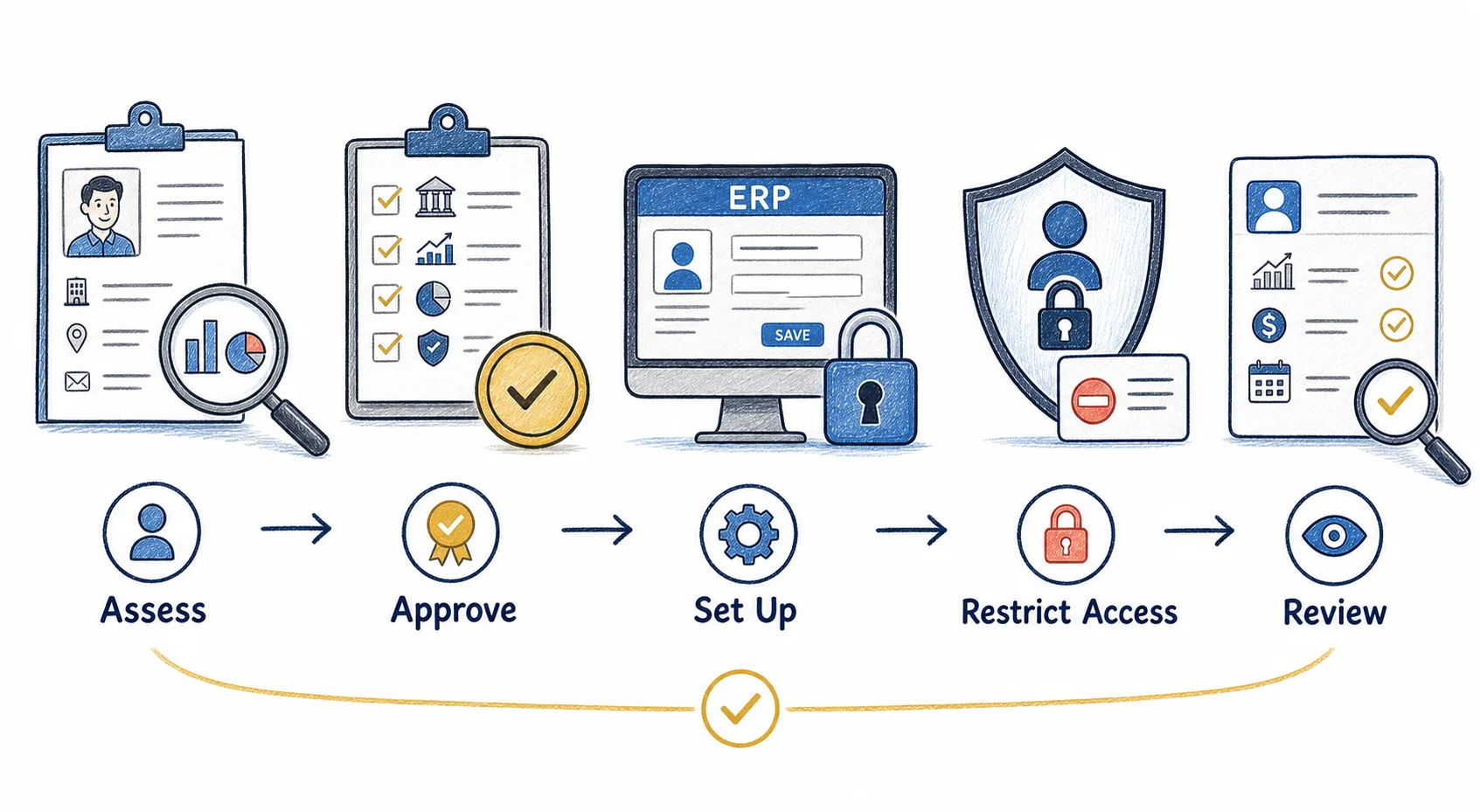
1. Customer Credit Setup
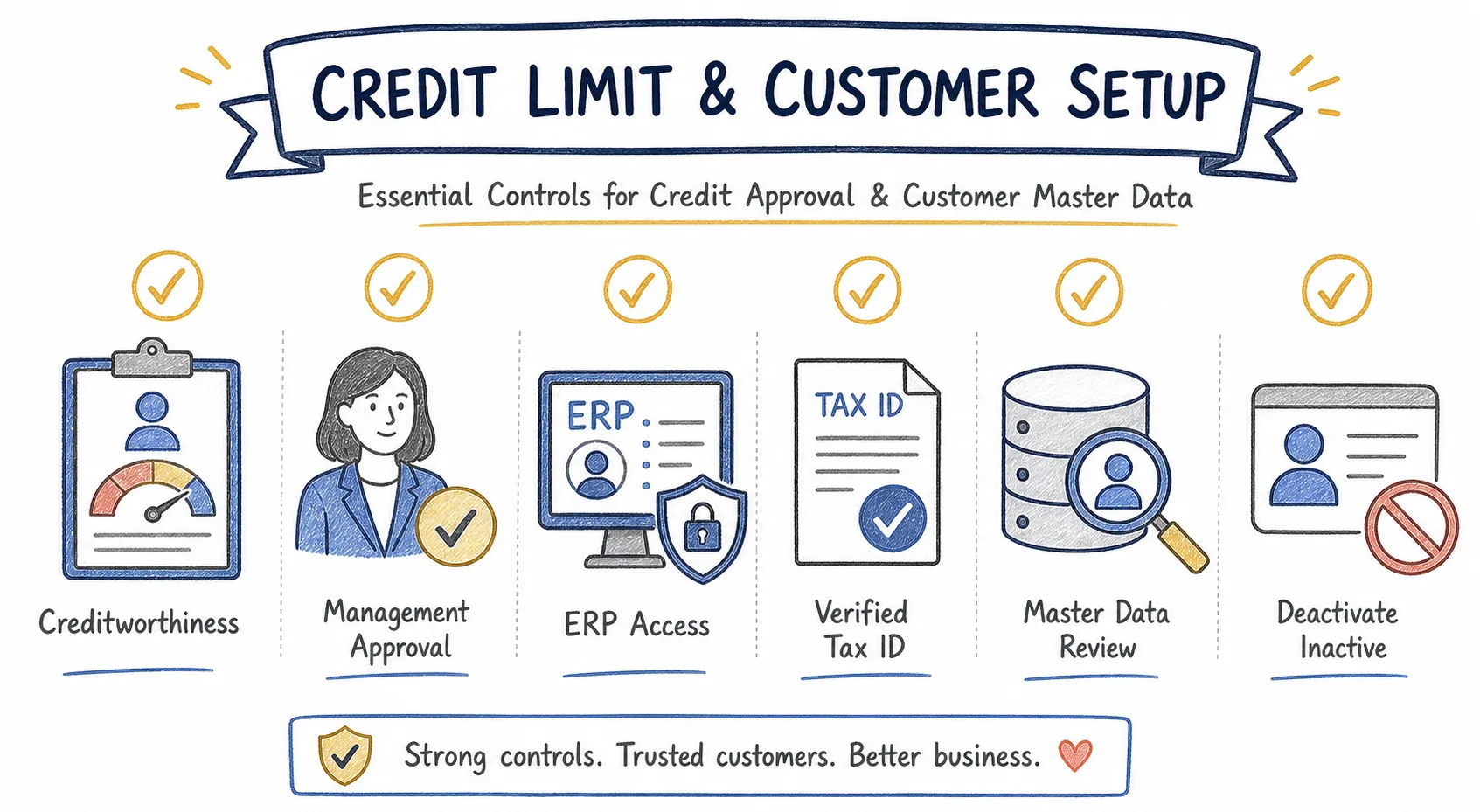
- Customer credit limits are established based on creditworthiness, payment history, and approved by senior management.
- Regular reviews of credit limits ensure they reflect current financial health and payment patterns of customers.
- Changes to credit limits are documented and authorized by a designated employee outside of the receivables department.
2. ERP System Controls
- A standardized process exists for setting up new customers in the ERP system, including verification of key data (e.g., tax IDs, legal entity names).
- Access to the ERP system is restricted to authorized personnel who do not have roles in processing receivables or handling cash.
- Periodic reviews of customer master data ensure that no unauthorized changes have been made.
- Procedures exist for deactivating inactive or terminated customers to avoid unauthorized transactions.
3. Customer Master Data Review
- Regular reconciliation of customer data with external sources (e.g., credit agencies) to verify accuracy.
- All changes to customer data (e.g., addresses, billing preferences) are reviewed and approved by management.
Q&A
- Q1: Why is it important to have formal credit limit approval procedures?
- Q2: What role does customer setup in the ERP system play in internal control?
- Q3: How do we determine the appropriate credit limit for customers?
- Q4: What are the risks of not updating customer records regularly in the ERP system?
Credit Limit & Customer Setup
- Setting appropriate credit limits and accurately maintaining customer data helps manage credit risk and prevent losses.
- 1. Customer Credit Setup — Customer credit limits are established based on creditworthiness, payment history, and approved by senior management.
- 2. ERP System Controls — A standardized process exists for setting up new customers in the ERP system, including verification of key data (e.g., tax IDs, legal entity names).
- 3. Customer Master Data Review — Regular reconciliation of customer data with external sources (e.g., credit agencies) to verify accuracy.