

L6. Collections
Revenue to Receivable
edmundchung
L6. Collections
WHY? Effective collection controls ensure that payments are applied correctly and timely, cash is properly handled, and overdue accounts are followed up promptly, thereby improving cash flow and reducing losses from bad debts.
HOW?
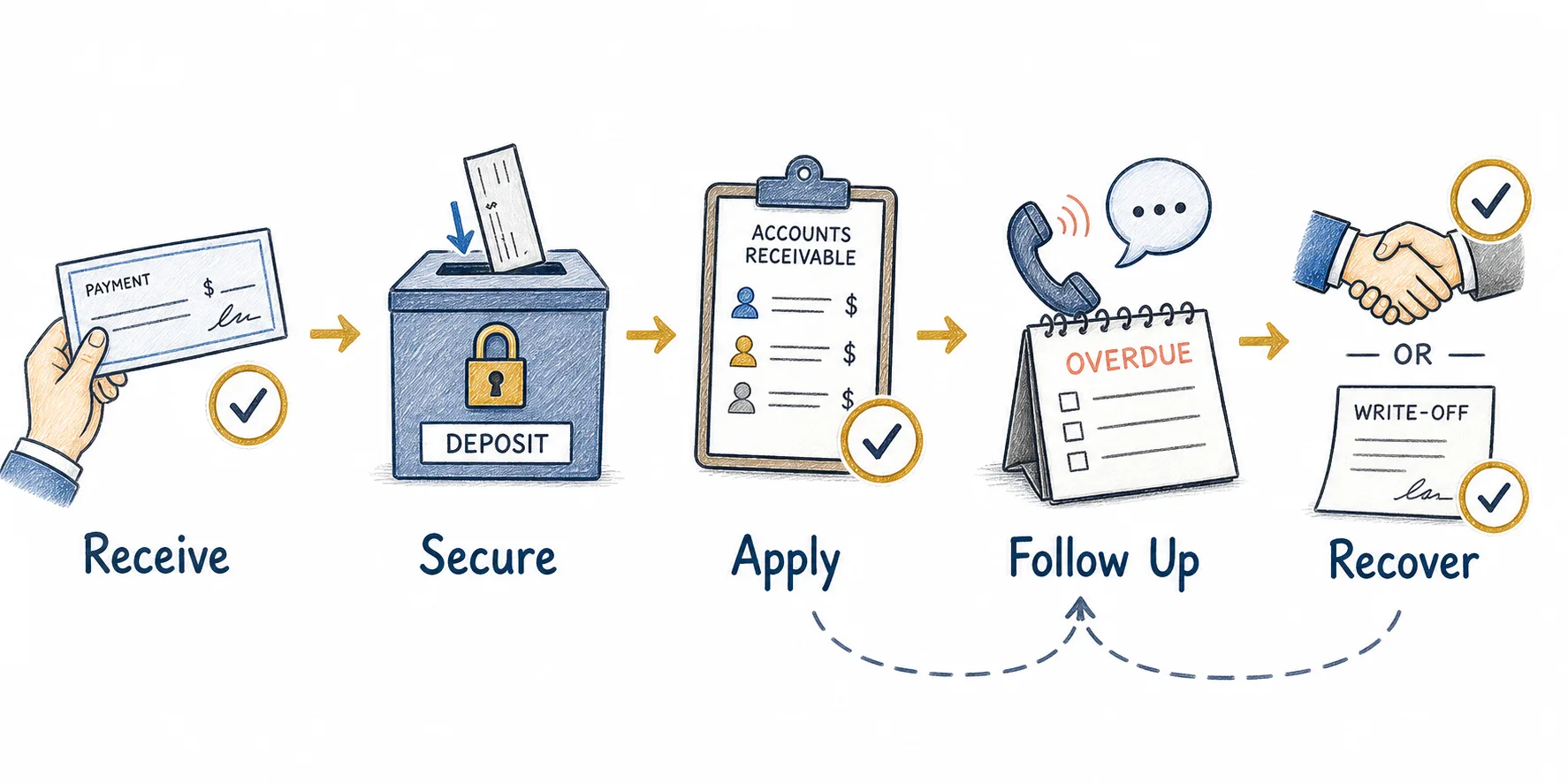
1. Cash Collection & Application
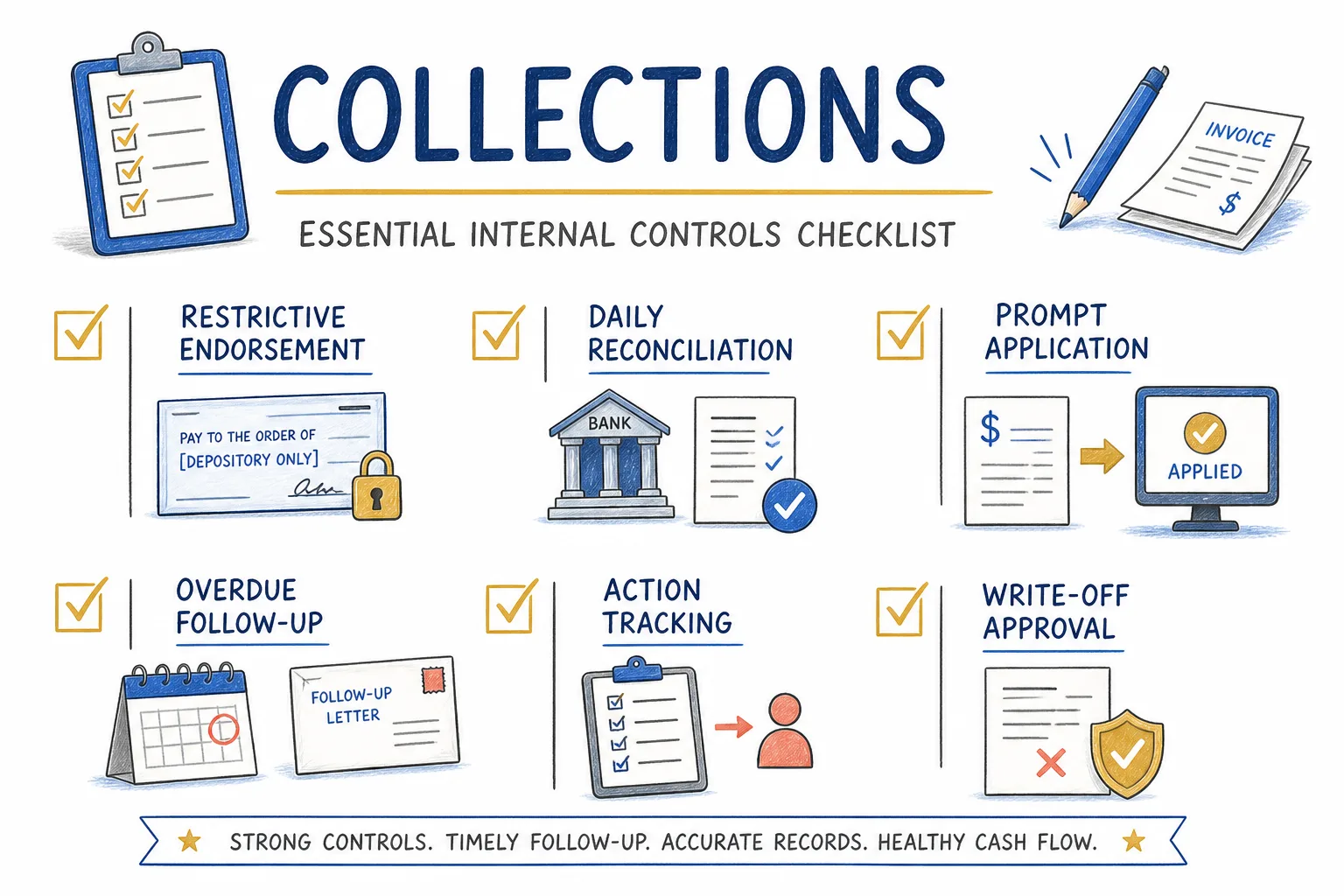
- Incoming checks are restrictively endorsed immediately upon receipt and recorded in the system.
- Payments are promptly applied against outstanding receivables, and discrepancies are investigated and resolved in a timely manner.
- Procedures are in place for the proper handling and timely deposit of cash receipts.
- Cash receipts are reconciled with bank deposits and AR records daily to ensure all collections are accounted for.
2. Follow-up overdue accounts
- Follow-up procedures for overdue accounts include reminders, collection letters, and referrals to collection agencies when necessary.
- Timely reviews of overdue accounts are conducted, and legal action is taken if required.
- Accounts considered uncollectible are periodically reviewed for potential write-off approval.
3. Monitoring and Reporting
- Collection activities are documented, and follow-up actions are tracked to ensure consistent recovery efforts.
- Collection performance is reported to management regularly, including aging schedules and resolution rates.
- Write-offs or other reductions of receivables are approved by a designated employee independent of the collection function.
4. Write-offs & Recovery
- Write-offs and reductions of receivables are documented and approved by management.
- Procedures exist for recovering uncollectible accounts, including legal remedies and referrals to collection agencies.
Q&A
- Q1: What are the best practices for timely and effective collections?
- Q2: Why is it important to place restrictive endorsements on checks upon receipt?
- Q3: How should overdue accounts be handled?
- Q4: What are the risks of not properly documenting collection efforts?
Collections
- Effective collection controls ensure that payments are applied correctly and timely, cash is properly handled, and overdue accounts are followed up promptly, thereby improving cash flow and reducing losses from bad debts.
- 1. Cash Collection & Application — Incoming checks are restrictively endorsed immediately upon receipt and recorded in the system.
- 2. Follow-up overdue accounts — Follow-up procedures for overdue accounts include reminders, collection letters, and referrals to collection agencies when necessary.
- 3. Monitoring and Reporting — Collection activities are documented, and follow-up actions are tracked to ensure consistent recovery efforts.
- 4. Write-offs & Recovery — Write-offs and reductions of receivables are documented and approved by management.