

L11. Inventory Management
Inventory and Warehouse
edmundchung
L11. Inventory Management
WHY? Inventory management involves the systematic control and monitoring of an organization's goods and materials. Effective inventory management is crucial for maintaining optimal stock levels, reducing holding costs, and preventing losses through shrinkage, obsolescence, or misplacement. Implementing robust internal controls ensures accurate inventory records, enhances forecasting and purchasing decisions, and supports the organization's financial reporting and operational efficiency.
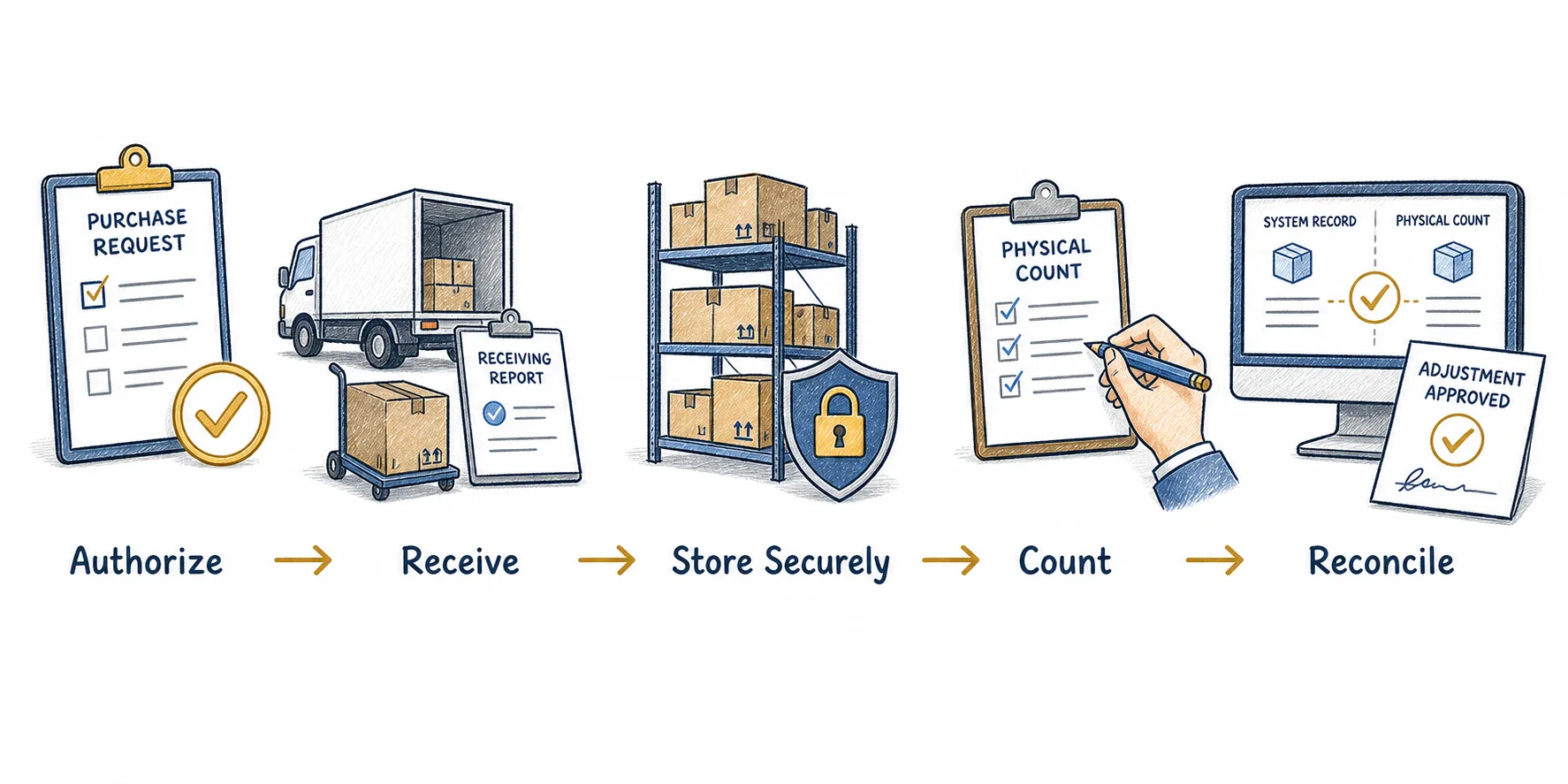
HOW?
Segregation of Duties
- Responsibilities for requisitioning, purchasing, and receiving inventory are separated from those of inventory record-keeping and custody.
- Inventory ledger accounting is separate from general ledger functions.
- Periodic physical inventories are conducted by employees independent of those with custody or record-keeping responsibilities.
- Segregation of duties is maintained in electronic record-keeping systems.
Authorization Controls
- Authority for purchasing decisions is clearly defined by management.
- Written authorization is required for all inventory adjustments and purchases.
- Sales of scrap or surplus items are reviewed and authorized by management.
Receipt Controls
- Receiving reports are prepared for all incoming materials and matched with purchase orders.
- Materials are only released from stock upon receiving approved requests.
- Movement of inventory between departments is documented and recorded.
Physical Inventory Controls
- Inventory items, especially high-value and sensitive items, are stored securely and access is restricted.
- Regular physical counts of inventory are conducted, including surprise audits, and results are reconciled with inventory records.
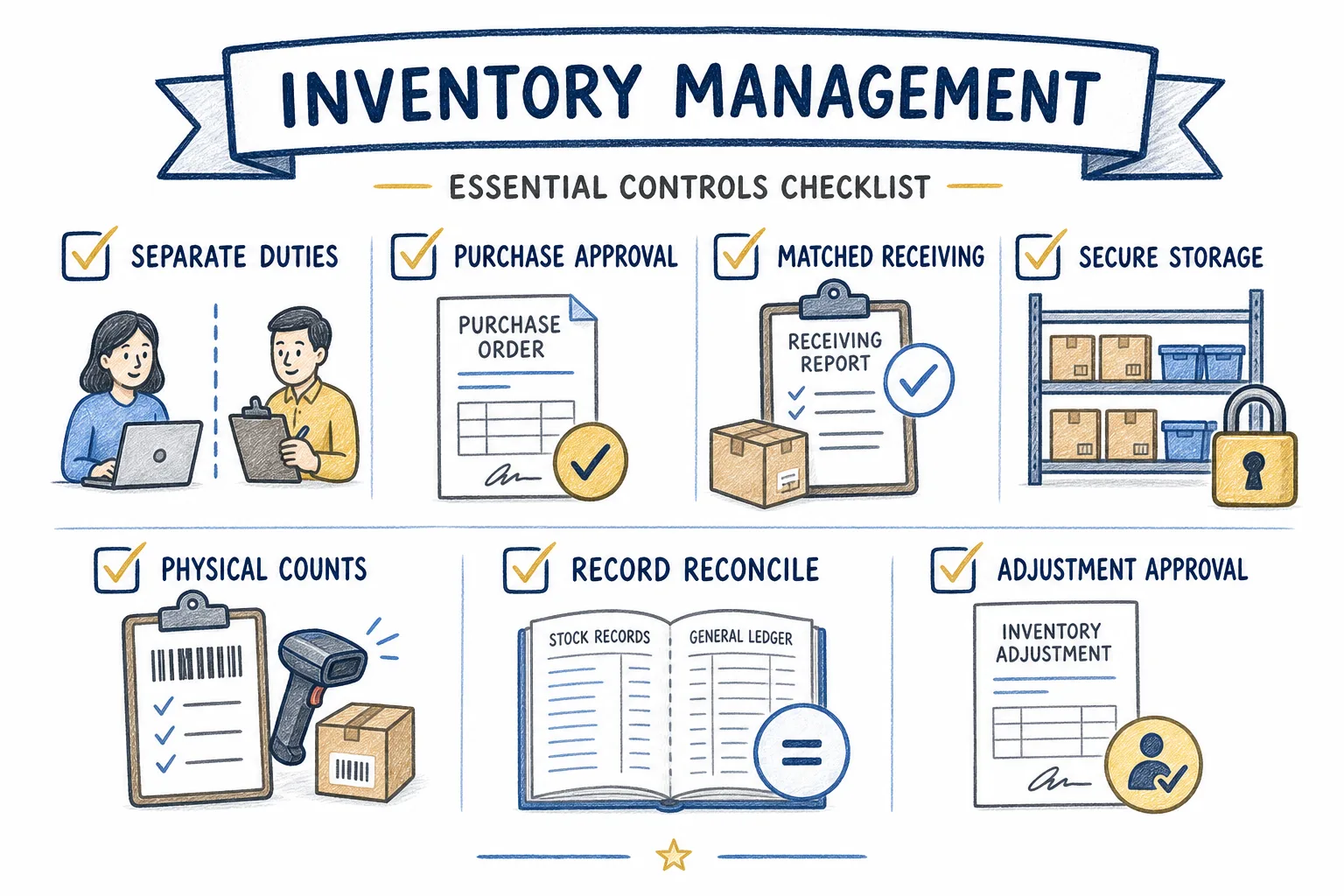
- Adjustments to inventory records are reviewed and approved by management.
Q&A
- Q1: What are some common methods for inventory valuation?
- Q2: How often should physical inventory counts be conducted?
- Q3: What is the role of inventory turnover in inventory management?
- Q4: Why is it important to segregate duties in inventory management?
- Q5: How can technology improve inventory management?
Inventory Management
- Inventory management involves the systematic control and monitoring of an organization's goods and materials.
- Segregation of Duties — Responsibilities for requisitioning, purchasing, and receiving inventory are separated from those of inventory record-keeping and custody.
- Authorization Controls — Authority for purchasing decisions is clearly defined by management.
- Receipt Controls — Receiving reports are prepared for all incoming materials and matched with purchase orders.
- Physical Inventory Controls — Inventory items, especially high-value and sensitive items, are stored securely and access is restricted.